
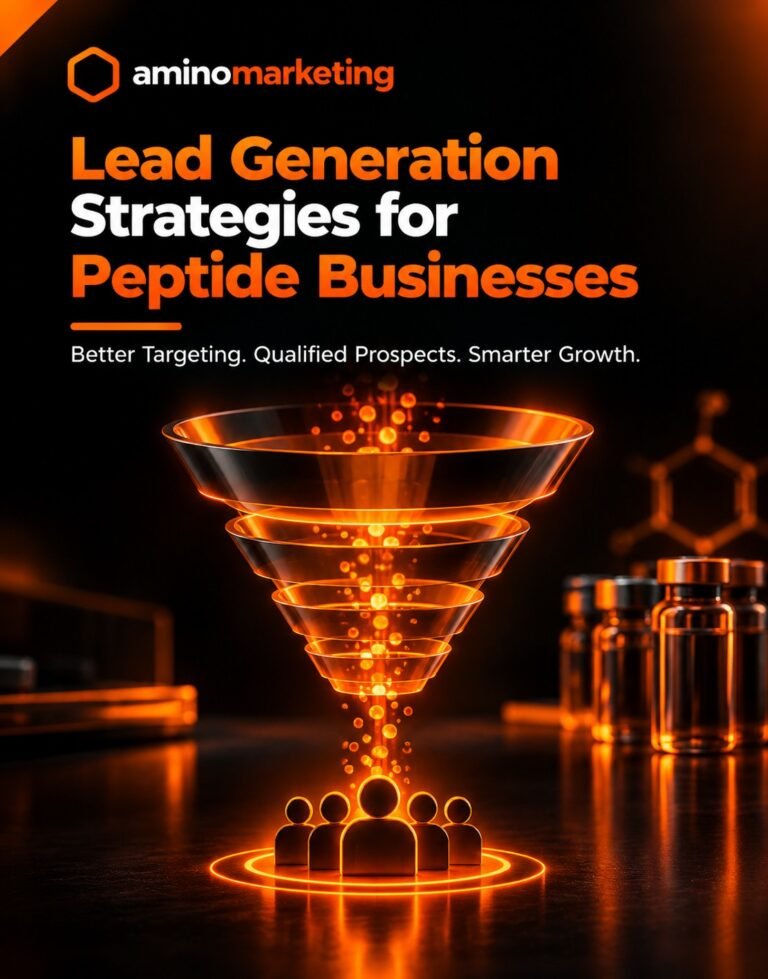
Growing a peptide business requires more than attracting website visitors or increasing brand visibility. Companies need to reach the right audience, communicate their value, and turn marketing engagement into meaningful business opportunities. Without a clear acquisition strategy, marketing campaigns can generate attention without attracting prospects who match the business’s goals.
Lead generation for peptide companies involves bringing together audience targeting, brand positioning, content marketing, search visibility, and appropriate follow-up to attract relevant prospects. The objective is not simply to generate more inquiries. It is to build a marketing process that helps businesses connect with potential customers whose needs align with their legitimate offerings.
For peptide brands operating in a competitive market, customer acquisition becomes more effective when each marketing channel supports a shared goal. SEO can improve organic visibility, educational content can answer customer questions, and eligible advertising campaigns can extend reach where platform policies permit. Email marketing can then support ongoing communication with people who have opted in to receive it.
Amino Marketing helps businesses approach these activities through coordinated digital marketing services, including SEO, Google Ads, Meta Ads, web development, and email marketing. With a clear strategy, peptide companies can strengthen their market presence, improve campaign relevance, and build a more consistent path toward qualified business opportunities.
Understanding Customer Acquisition for Peptide Businesses
Customer acquisition describes the process of attracting potential customers and guiding them toward a business relationship. For peptide companies, this process should reflect the company’s business model, intended audience, product category, and applicable legal and advertising requirements.
Some businesses may primarily serve commercial organizations, laboratories, or other professional audiences. Others may operate in different peptide-related categories with different customer expectations. These differences influence the marketing channels, messages, and acquisition methods that make sense for each company.
An effective approach to lead generation for peptide companies begins by understanding three important questions:
- Who is the business trying to reach?
- What information do those prospects need before contacting the company?
- Which marketing channels can reach them appropriately and effectively?
Answering these questions helps businesses avoid spending resources on audiences that are unlikely to be relevant.
Why More Leads Do Not Always Mean Better Results
A campaign can generate hundreds of clicks or inquiries without producing meaningful business opportunities. This can happen when targeting is too broad, messaging creates the wrong expectations, or the campaign attracts people who are not a suitable match.
Peptide customer acquisition should therefore focus on both lead volume and lead quality. A smaller number of relevant inquiries may be more valuable than a large number of contacts with little genuine interest.
Businesses should define what a qualified prospect looks like before evaluating campaign success. Depending on the business model, relevant criteria might include the prospect’s organization, professional requirements, geographic market, and alignment with the company’s legitimate offerings.
This gives marketing teams a more practical way to measure performance and improve their approach.
Define the Right Audience Before Investing in Marketing
Audience research is one of the most important foundations of a successful peptide marketing strategy. Before launching campaigns, companies should understand the people and organizations they want to reach, the questions those audiences ask, and the information they need to make decisions.
Broad targeting may increase exposure, but it can also attract irrelevant visitors. More precise audience research helps businesses develop marketing messages that reflect genuine needs.
Identify Your Ideal Customer Segments
Start by separating potential audiences according to their business requirements and relationship with your offerings. For example, professional buyers may prioritize supplier information, documentation, ordering requirements, and business reliability. Other audiences may need educational information before they understand whether a company is relevant to them.
Useful audience research may consider:
- Industry and organization type.
- Professional role and purchasing responsibilities.
- Relevant business requirements.
- Questions asked during the research process.
- Geographic markets the company can serve.
- Applicable restrictions and eligibility requirements.
This research supports more effective peptide audience targeting and gives marketing campaigns a clearer direction.
Align Campaign Messaging With Customer Needs
Once the audience is defined, marketing communication should reflect its priorities. A message designed for commercial buyers may not be suitable for a general educational audience.
Relevant messaging helps prospects understand the company’s actual offerings without relying on exaggerated claims or unsupported promises. It also makes it easier to connect a campaign with the appropriate landing page, content resource, or contact option.
For businesses developing lead generation for peptide companies, audience alignment is an important step toward improving the relevance of incoming inquiries.
Strengthen Brand Positioning to Attract Relevant Prospects
In a competitive market, prospective customers need to understand why a business is worth considering. Clear positioning explains what a company offers, whom it serves, and what distinguishes its approach.
Peptide brand awareness should go beyond recognition. A brand becomes more meaningful when its messaging consistently communicates its capabilities, values, and business relevance across digital channels.
Explain What Makes Your Business Relevant
Your marketing materials should clearly describe your actual offerings and the audience you serve. Important information may include product or service categories, company background, business policies, contact details, and relevant qualifications or documentation.
The information should be accurate and consistent with applicable requirements. For peptide-related businesses, responsible messaging is particularly important because permitted claims and advertising eligibility may depend on the specific product, intended use, and market.
Clear positioning helps potential customers evaluate a company without having to interpret vague or conflicting messages.
Build Consistency Across Marketing Channels
When a business presents different messages on search engines, social media, advertisements, and email, prospects may struggle to understand its value.
A coordinated peptide marketing strategy establishes a consistent core message while adapting it to the format and purpose of each channel. Search content can answer detailed questions, social media can support awareness where permitted, and email can maintain relevant communication with subscribers.
This consistency can strengthen lead generation for peptide companies by creating a more recognizable and understandable brand experience.
Use SEO to Attract Prospects Through Organic Search
Search engine optimization can help peptide businesses reach people who are actively researching relevant topics, categories, or suppliers. When content aligns with search intent, it can attract visitors who have a genuine reason to learn more about the company.
However, successful SEO requires more than inserting keywords into articles. Content relevance, website structure, search intent, technical accessibility, and overall usefulness all contribute to the quality of an organic search strategy.
Research Keywords That Match Customer Intent
Peptide keyword research helps identify the terms and questions audiences use when looking for relevant information. These keywords should be organized according to their intent and mapped to appropriate pages or content topics.
Some searches may indicate early research, while others may reflect a more specific business requirement. Understanding this distinction helps companies develop content that addresses the right questions at the right time.
Avoid targeting unrelated high-volume keywords simply because they appear attractive. Relevance is more useful than traffic that has little connection to the business.
Develop Content Around Genuine Questions
Educational articles, industry explanations, supplier-selection guidance, and relevant frequently asked questions can help audiences understand a business category.
A well-planned peptide content marketing strategy should support the reader’s information needs while accurately representing the company’s expertise and offerings. Content should not make unsupported scientific, therapeutic, or commercial claims.
Where appropriate, articles can direct readers to relevant company information or provide a clear way to contact the business.
By connecting relevant search intent with useful content, SEO can become a sustainable component of lead generation for peptide companies.
Use Paid Advertising Carefully and Strategically
Paid campaigns can increase visibility, but peptide-related businesses must assess platform eligibility before investing in advertising. Google Ads and Meta Ads have policies that vary by product category, intended use, claims, location, and campaign type. Some peptide-related products or businesses may be restricted or ineligible.
Companies should review current platform policies and applicable legal requirements before launching any campaign. Approval should never be assumed simply because a competitor appears to be advertising a similar offering.
Focus on Relevance Where Advertising Is Permitted
For eligible campaigns, the audience, message, and destination page should work together. The advertisement should accurately describe the offering, while the landing page should provide relevant information and a clear next step.
Campaigns should be assessed using meaningful business indicators rather than clicks alone. A large number of visits does not automatically mean a campaign is attracting suitable prospects.
For peptide paid advertising, a careful approach includes reviewing eligibility, monitoring campaign performance, and avoiding unsupported or misleading claims.
Evaluate Different Channels Independently
Search advertising and social advertising serve different purposes. Search campaigns may connect with people actively looking for a specific solution, while permitted social campaigns may support awareness and engagement.
The appropriate channel depends on the business, target audience, platform rules, and campaign objective. Not every peptide business will be eligible to use every advertising option.
A disciplined approach helps companies focus on suitable opportunities instead of assuming that higher advertising spend will automatically improve customer acquisition.
Make Content Marketing Part of the Acquisition Process
Content marketing helps businesses explain their value, answer questions, and maintain a useful presence across digital channels. For specialized peptide markets, content can help prospects understand a company’s positioning and determine whether its offerings are relevant.
The strongest content strategy is built around audience needs rather than publishing frequency alone.
Create Content for Different Stages of Research
Potential customers may have different information needs depending on how familiar they are with a company or category.
Early-stage content can explain relevant terminology and business categories. More detailed content may address supplier evaluation, company capabilities, documentation, or purchasing considerations where appropriate.
Organizing content around these needs gives prospects a clearer path through the information they require.
Connect Content With Relevant Next Steps
Each content asset should have a clear purpose. Some articles are intended to attract organic traffic, while others help readers evaluate a business or understand its offerings.
When appropriate, include a relevant next step, such as reading related information, reviewing the company’s services, or contacting the business with a question.
This approach strengthens peptide content marketing and helps connect awareness with customer acquisition without turning every article into an aggressive sales pitch.
Develop a Peptide Marketing Funnel That Supports Growth
A marketing funnel organizes the journey from initial awareness to engagement and, where appropriate, a qualified inquiry. It helps businesses understand how different marketing channels contribute to customer acquisition.
A peptide marketing funnel should reflect the actual decision-making process of the intended audience rather than follow a generic template without considering the business model.
Attract the Right Audience
The first stage focuses on reaching relevant prospects through suitable channels. Depending on eligibility and business needs, these may include SEO, educational content, industry partnerships, email, and permitted advertising.
The aim is to generate meaningful attention from people who have a legitimate reason to consider the business.
Build Interest Through Useful Information
Once prospects encounter the brand, they need enough information to understand its relevance. Consistent messaging, accurate business details, and helpful content can make it easier to evaluate the company.
This stage should focus on clarity and credibility rather than exaggerated promises.
Encourage an Appropriate Action
When prospects are ready to take the next step, make that action easy to understand. Depending on the business, this could involve submitting a contact inquiry, requesting business information, or reviewing a relevant offering.
The next step should match the visitor’s intent and the company’s actual capabilities.
Measure the Journey From Awareness to Inquiry
Track relevant website visits, meaningful engagement, inquiries, lead sources, and subsequent business outcomes where possible.
These measurements help identify where prospects lose interest and which channels contribute to relevant opportunities. Over time, the funnel can be refined based on evidence rather than assumptions.
A well-managed funnel provides a practical framework for lead generation for peptide companies and supports more informed marketing decisions.
Improve Lead Quality Through Better Qualification
Not every inquiry represents a suitable business opportunity. Some contacts may come from outside the company’s target market, while others may not have the requirements or intent that align with its offerings.
Improving lead quality begins with defining the characteristics of a relevant prospect.
Establish Practical Qualification Criteria
Depending on the business model, qualification may consider the prospect’s organization, industry, stated requirements, location, and alignment with the company’s services or products.
The criteria should be consistent and relevant. Businesses should avoid collecting unnecessary personal information or using sensitive personal details inappropriately.
A clear definition of qualified leads for peptide companies helps teams compare campaign results more accurately.
Identify Which Channels Produce Better Leads
Compare the quality of inquiries generated by different channels, campaigns, and content topics. One source may generate a high volume of contacts, while another produces fewer but more relevant opportunities.
Reviewing these differences helps marketing teams understand where their efforts are most useful.
For businesses looking to improve peptide business growth, lead quality should be considered alongside traffic, engagement, and overall campaign costs.
Use Email Marketing to Support Lead Nurturing
Some prospects need additional time and information before contacting a company or making a business decision. Email marketing can support this process by providing relevant communications to people who have opted in or otherwise provided appropriate permission.
Peptide email marketing should be useful, consistent, and respectful of recipients’ preferences.
Share Relevant and Helpful Information
Depending on the business, email communications may include company updates, educational resources, relevant service information, or answers to common questions.
The purpose is to maintain a helpful relationship rather than repeatedly sending generic promotional messages. Content should reflect the recipient’s interests and the reason they agreed to receive communications.
Maintain Responsible Follow-Up
Lead nurturing for peptide businesses should include clear expectations, appropriate consent, and accessible unsubscribe options. Businesses should also comply with applicable privacy and email marketing requirements.
Where appropriate, segment subscribers based on their stated interests or the content they requested. This can make communications more relevant without collecting unnecessary information.
Email should work alongside the broader acquisition strategy rather than operate as an isolated activity.
Measure Results and Refine Your Marketing Strategy
Marketing performance should be evaluated against business objectives. Website traffic, impressions, and engagement can indicate exposure, but they do not necessarily demonstrate that a company is attracting relevant prospects.
Reliable measurement helps businesses understand what is working and where improvements may be needed.
Track Meaningful Performance Indicators
Depending on the campaign, useful indicators may include:
- Relevant website visits and landing-page engagement.
- Contact form submissions and qualified inquiries.
- Lead sources and campaign attribution.
- Cost per relevant inquiry, where applicable.
- Follow-up engagement and progression toward business opportunities.
- Sales outcomes, where reliable tracking is available.
Tracking should be configured carefully to avoid duplicate events, inaccurate attribution, and inflated conversion totals.
Use Data to Improve Campaign Decisions
If a campaign attracts visitors but few relevant inquiries, review its targeting, messaging, landing page, and offer. If a channel generates relevant prospects consistently, evaluate whether its performance can be maintained or improved.
These insights can help businesses refine digital marketing for peptide businesses and allocate resources more effectively.
A measurement-led approach makes lead generation for peptide companies easier to evaluate and improve over time.
How Amino Marketing Supports Peptide Customer Acquisition
Amino Marketing helps businesses coordinate digital marketing through services that include SEO, Google Ads, Meta Ads, web development, and email marketing. For peptide businesses, these services can support a connected approach to audience research, brand visibility, engagement, and acquisition.
The objective is to align marketing activities with the company’s audience and business goals rather than treat each channel as an independent task.
Develop a Strategy Around Your Audience
A useful marketing plan begins with understanding the business, its intended audience, its position in the market, and the opportunities it can realistically pursue.
This foundation helps determine which channels are appropriate and what outcomes should be measured.
Align Messaging Across Marketing Channels
Search content, eligible advertising, email communications, and website messaging should provide a consistent understanding of the business.
When channels work together, prospects can move between them without encountering conflicting information or unclear expectations.
Focus on Meaningful Business Opportunities
Amino Marketing emphasizes the importance of connecting marketing activity with relevant outcomes. Visibility and engagement remain useful indicators, but they should be considered alongside inquiry relevance and business performance.
For companies looking for a peptide marketing agency, it is important to choose a partner that understands audience alignment, transparent measurement, accurate messaging, and the restrictions that may apply to peptide-related advertising.
Get a Free Consultation with Amino Marketing to discuss your business goals, audience, and marketing opportunities. A tailored strategy can help identify suitable channels and practical improvements for your peptide business.
Build a More Effective Customer Acquisition Strategy
Sustainable customer acquisition depends on reaching the right people, providing relevant information, and creating a clear path toward meaningful engagement. For peptide businesses, this requires a coordinated approach to audience targeting, brand positioning, organic visibility, appropriate advertising, email marketing, and performance measurement.
There is no universal campaign that guarantees a steady stream of qualified prospects. Results depend on the business model, audience needs, channel eligibility, competition, and the quality of the marketing approach.
By evaluating performance and improving the connection between channels, businesses can make more informed decisions about where to invest their resources.
Amino Marketing helps peptide companies assess digital marketing opportunities and build a coordinated approach focused on relevant audiences and measurable business objectives. With a clear plan, lead generation for peptide companies can become a more structured part of long-term customer acquisition and business growth.
Frequently Asked Questions
How can peptide companies improve customer acquisition?
Peptide companies can improve customer acquisition by defining their target audience, clarifying their market positioning, creating useful content, improving organic visibility, and evaluating suitable marketing channels. Performance should be measured by the relevance of inquiries and meaningful business outcomes, not just traffic.
What are the most effective lead generation strategies for peptide businesses?
Suitable strategies may include SEO, educational content, audience research, permission-based email marketing, and eligible paid advertising. The best combination depends on the business model, audience, platform restrictions, and marketing objectives.
How to generate leads for peptide companies?
Begin by identifying the audience the business can serve, then develop relevant messaging and choose appropriate channels. Connect marketing activities with clear next steps and measure which sources produce suitable inquiries.
How can peptide brands attract qualified prospects?
Peptide brands can attract qualified prospects by communicating their actual offerings clearly, answering relevant questions, and targeting appropriate audiences. Clear positioning and consistent information can help prospects determine whether a business meets their requirements.
How can peptide companies improve lead quality?
Define practical qualification criteria, review where inquiries originate, and refine campaign targeting and messaging. Evaluate both the number of inquiries and how well those contacts match the company’s legitimate business objectives.
Should peptide companies use paid advertising for lead generation?
Only when the specific product, business, and campaign are eligible under the advertising platform’s current policies and applicable laws. Peptide-related advertising can be restricted, so companies should verify eligibility before launching campaigns.