
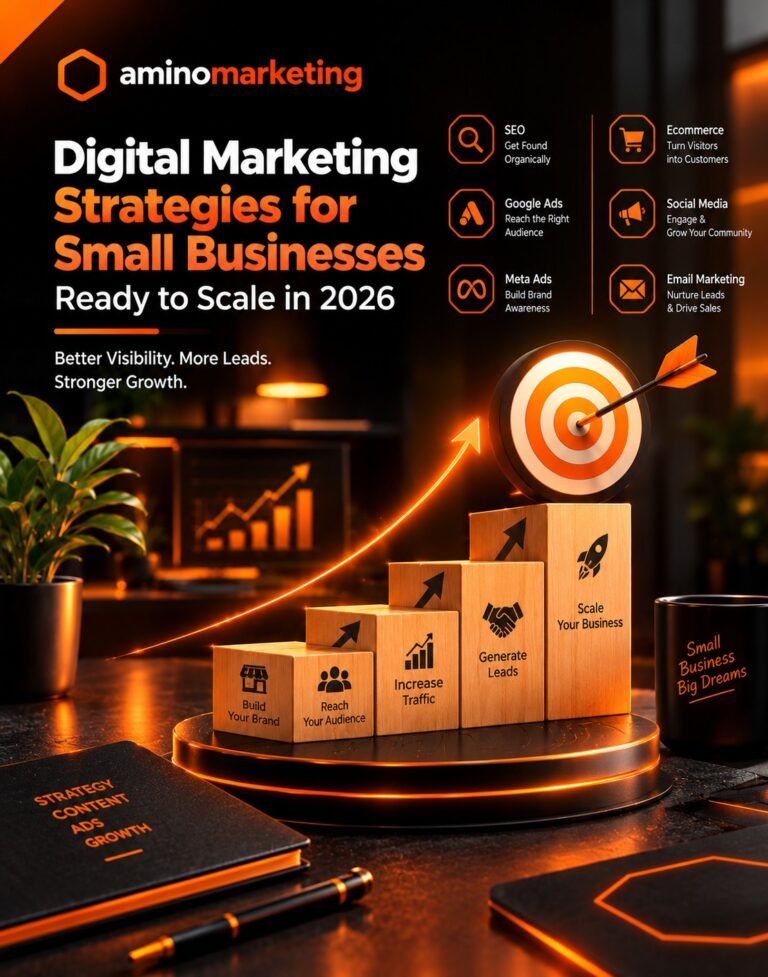
Small businesses need more than an attractive website to compete online. They need a clear marketing direction, a strong brand message, and a reliable way to reach the right audience. Without these elements, even a valuable product or service can struggle to attract attention and generate leads.
At Amino Marketing, we help businesses strengthen their online presence through SEO, paid advertising, website development, email marketing, and conversion-focused digital campaigns. Our approach focuses on connecting the right marketing channels with measurable business objectives.
The most effective digital marketing strategies for small businesses combine visibility, audience engagement, and lead generation. Instead of investing in every available platform, businesses should prioritize the channels that align with their audience, budget, and growth goals.
Whether you run a local company, an online store, or a specialized business in the peptide industry, the right marketing approach can help you reach potential customers and build long-term brand recognition.
Build a Clear Digital Marketing Foundation
Before investing in advertising or publishing content, establish a clear foundation for your marketing activities. Your website, brand message, audience, and conversion goals should work together.
Start by identifying the customers you want to reach. Consider their needs, the problems they want to solve, and the information they search for before making a decision.
Next, define what success means for your business. Depending on your goals, success could include more qualified leads, website purchases, consultation bookings, or increased brand awareness.
These steps help turn digital marketing strategies for small businesses into a structured growth plan rather than a collection of disconnected activities.
Identify Your Target Audience
Understanding your audience makes it easier to create relevant campaigns and choose suitable marketing channels.
For example, a local service provider may benefit from location-based SEO and targeted search advertising. An ecommerce business may prioritize product pages, shopping-related searches, and email campaigns. A specialized B2B company may need educational content and lead-generation campaigns.
Create a simple audience profile that covers:
- Customer needs: What problems are potential customers trying to solve?
- Search behavior: What phrases do they use when researching products or services?
- Buying intent: Are they exploring options or ready to contact a provider?
- Decision factors: Do they prioritize price, expertise, product quality, or convenience?
- Preferred channels: Where are they most likely to engage with your brand?
This information provides direction for your content, advertising, and website improvements.
Set Measurable Marketing Goals
Every campaign should have a specific purpose. Rather than aiming only for more traffic, define the actions you want visitors to take.
Useful performance indicators include organic clicks, qualified leads, conversion rate, cost per lead, return on ad spend, and repeat purchases.
Tracking these metrics helps you identify which digital marketing strategies for small businesses are contributing to business outcomes and which need improvement.
Strengthen Your Website for Leads and Sales
Your website is often one of the first places potential customers evaluate your business. It should explain what you offer, who you serve, and why someone should consider working with you.
A website that attracts visitors but provides little direction may fail to generate meaningful results. This is why website performance, content, usability, and conversion paths deserve attention.
Make Your Website Easy to Navigate
Organize your website around the needs of your audience. Use clear navigation, descriptive page headings, concise service information, and visible calls to action.
Visitors should be able to understand your offering without searching through multiple pages. Contact information, inquiry forms, product details, and relevant trust signals should also be easy to find.
Mobile responsiveness is essential because visitors may access your website from different devices. Review page layouts, buttons, forms, and loading performance to identify barriers that could interrupt the customer journey.
Create Landing Pages Around Specific Goals
A dedicated landing page can help focus attention on a particular service, offer, or advertising campaign.
For example, a digital marketing agency may create separate landing pages for SEO, paid advertising, and website development. A business serving a specialized industry may develop pages that address the needs and concerns of that audience.
Each landing page should include a relevant headline, clear benefits, supporting information, trust elements, and a straightforward next step.
Website improvements are among the most practical digital marketing strategies for small businesses because they help businesses make better use of the traffic they already receive.
Use SEO to Attract Relevant Organic Traffic
Search engine optimization helps businesses become more visible when potential customers search for relevant products, services, and information.
Unlike campaigns that depend entirely on paid traffic, SEO can build a foundation for sustained organic visibility. However, results depend on competition, website quality, search demand, and consistent implementation.
Target Keywords That Match Search Intent
Keyword research should identify the terms your potential customers actually use and the intent behind those searches.
Informational keywords can support educational blog content, while commercial and transactional keywords may be better suited to service pages or product pages.
For example, a business looking for a marketing partner may search for a digital marketing agency, while a potential customer researching a specific service may use a more detailed query.
Map primary and secondary keywords to appropriate pages to reduce unnecessary overlap. Each important page should have a clear purpose and provide information that matches its target search intent.
Improve On-Page and Technical SEO
On-page SEO helps search engines and visitors understand your content. Review title tags, meta descriptions, headings, internal links, image alt text, and the relevance of your page content.
Technical SEO supports crawling, indexing, and usability. Check for broken links, incorrect redirects, duplicate pages, sitemap problems, and performance issues.
Publish useful content that answers genuine customer questions, and connect relevant blog articles to existing service pages through natural internal links.
SEO is one of the digital marketing strategies for small businesses that can support long-term growth when it is based on useful content, sound technical foundations, and realistic expectations.
Invest in Paid Advertising With a Clear Objective
Paid advertising can help businesses reach potential customers more quickly than organic channels alone. However, campaigns need suitable targeting, compelling messaging, relevant landing pages, and ongoing performance evaluation.
A small business should not spend its entire marketing budget across multiple platforms without understanding which channels are appropriate for its audience.
Use Google Ads to Capture Search Demand
Google Ads can help eligible businesses reach people searching for relevant services or products. Search campaigns are particularly useful when customers demonstrate clear intent through their queries.
To improve campaign efficiency:
- Organize campaigns around closely related keywords and offerings.
- Write ad copy that accurately reflects the landing page.
- Use negative keywords to reduce irrelevant traffic.
- Monitor cost per conversion rather than clicks alone.
- Test landing page content and calls to action.
- Review search terms and adjust targeting as performance data develops.
Businesses should also verify advertising eligibility before launching campaigns in regulated or restricted industries.
Use Meta Ads to Build Awareness and Engagement
Meta Ads can help eligible businesses reach audiences through Facebook and Instagram placements. Depending on the campaign objective, they can support brand awareness, engagement, website traffic, and conversions.
Creative quality is important. Use clear messaging, relevant visuals, and a strong reason for people to engage with the advertisement.
Rather than relying on assumptions, test different creative concepts and audience segments where permitted. Monitor meaningful outcomes and avoid judging campaign performance by impressions alone.
Paid media works best when it supports a wider marketing plan. These digital marketing strategies for small businesses should connect advertising activity with useful website content, clear offers, and an effective follow-up process.
Develop Industry-Specific Marketing for Peptide Businesses
Specialized industries often need a more focused approach than general marketing campaigns. The peptide industry, for example, may involve distinct audiences, technical product information, compliance considerations, and platform restrictions.
Digital marketing for peptide brands should begin with a clear understanding of the business model, intended audience, permitted claims, and applicable advertising policies.
Build a Consistent Peptide Marketing Approach
Marketing for peptide brands may involve SEO, educational content, website development, email communication, and suitable paid campaigns. The right combination depends on the company’s products, audience, and regulatory responsibilities.
A peptide marketing agency can help coordinate these activities so that the brand message remains consistent across relevant channels.
Businesses should also distinguish between educational content and promotional claims. Product descriptions and advertisements should be accurate, supportable, and appropriate for the intended audience.
Plan Peptide Paid Marketing Carefully
Peptide paid marketing requires additional review because advertising platforms may restrict particular substances, products, health-related claims, or business models.
Before launching peptide paid advertising, review the current policies of the intended platform and confirm whether the product and landing page are eligible.
Campaign planning may include peptide Google Ads, google ads peptides campaigns, or peptide Meta Ads only where the relevant products, claims, and account are permitted. Approval should never be assumed.
For suitable campaigns, advertising for peptide brands should emphasize accurate information, appropriate audience targeting, and a clear relationship between the ad and its destination page.
A peptide advertisement should not make unsupported medical claims or imply guaranteed outcomes. Compliance and credibility are important parts of sustainable peptide digital marketing.
Connect Organic and Paid Channels
Businesses in this sector can also explore peptide social media marketing, educational articles, and email communication where appropriate. These channels can provide information, maintain brand consistency, and help interested audiences understand the company’s offering.
Online marketing for peptide businesses should reflect the specific business model rather than copying a generic campaign from another industry.
An experienced peptide digital marketing agency can help evaluate the available channels, develop a realistic marketing plan, and identify opportunities that align with business objectives and platform requirements.
Apply Digital Marketing Strategies for Ecommerce Growth
Ecommerce businesses need a marketing approach that connects product discovery with purchase decisions and customer retention.
The most effective digital marketing strategies for small businesses selling online consider the entire shopping journey, from the first search to the post-purchase experience.
Improve Product Pages and Category Pages
Product pages should provide clear descriptions, accurate specifications, useful images, pricing information, and relevant purchase details.
Category pages should help shoppers compare options and find products without unnecessary friction.
Use descriptive page titles, logical headings, appropriate internal links, and structured data where applicable. Make sure product availability and other displayed details remain accurate.
Support Repeat Purchases Through Email
Email marketing can help ecommerce brands share product updates, useful information, relevant offers, and post-purchase communication with subscribers who have consented to receive messages.
Segmentation allows businesses to send more relevant content based on customer interests or previous interactions. Automated welcome emails, order updates, and suitable follow-up messages can also support the customer experience.
Digital marketing strategies for ecommerce should prioritize customer value instead of relying only on discounts. Helpful communication, reliable service, and relevant product recommendations can contribute to stronger customer relationships.
Create Content That Answers Customer Questions
Content marketing gives businesses opportunities to demonstrate expertise, address customer concerns, and attract people researching relevant topics.
Instead of publishing articles simply to increase the number of blog posts, focus on questions that matter to your audience and connect naturally with your services or products.
Build Content Around Customer Intent
A useful content plan can include educational blog posts, detailed service pages, comparison guides, FAQs, and practical resources.
For example, a business may publish articles explaining common industry challenges, outlining important selection criteria, or answering questions customers frequently ask before contacting a provider.
Each piece of content should have a defined purpose. Some articles may attract early-stage visitors, while others may support people comparing solutions or preparing to make a purchase.
Distribute Content Across Relevant Channels
Publishing an article is only one part of content marketing. Share suitable content through email newsletters, relevant social media channels, and other appropriate distribution methods.
Repurpose key insights into short posts, visual summaries, or email updates without copying the same message everywhere.
These digital marketing strategies for small businesses help content serve a wider purpose while keeping the brand’s communication consistent.
Use Social Media to Build Brand Recognition
Social media can help small businesses maintain visibility, communicate with their audiences, and demonstrate the value of their products or services.
The goal is not necessarily to publish on every platform. Select the channels that fit your audience and create a manageable publishing schedule.
Share Useful and Relevant Content
A balanced social media plan may include educational posts, product or service information, customer questions, company updates, and behind-the-scenes content where appropriate.
Keep messaging consistent with your website and other marketing channels. Respond professionally to relevant comments and inquiries, and make sure social media activity supports broader business goals.
For specialized companies, including those exploring peptide social media marketing, content must also comply with the applicable platform rules and relevant legal requirements.
Measure Engagement Beyond Follower Counts
Follower growth can indicate increased visibility, but it does not automatically translate into sales.
Review link clicks, qualified inquiries, meaningful engagement, and conversions where tracking is available. Use those insights to improve content topics, formats, and publishing frequency.
Build a Stronger Customer Journey With Email Marketing
Email marketing gives businesses a direct way to communicate with subscribers who have opted in to receive their messages.
It can support lead nurturing, customer education, product announcements, and retention. It also allows businesses to continue conversations that began through organic search, advertising, or social media.
Start with a clear purpose for each email. Provide useful information, use a relevant subject line, and include a suitable next step.
Segment audiences when there is enough reliable information to make communication more relevant. Monitor delivery, engagement, unsubscribe rates, and conversions to evaluate performance.
Email should complement other digital marketing strategies for small businesses, not operate as a disconnected activity. A coordinated approach helps maintain consistent messaging throughout the customer journey.
Track Results and Improve Your Marketing Budget
Small businesses often need to make careful decisions about where to invest limited resources. Tracking results helps identify opportunities to improve performance without spending unnecessarily.
Focus on Meaningful Performance Indicators
Choose metrics that reflect your goals. For lead generation, these may include qualified inquiries, cost per lead, landing page conversion rate, and the percentage of leads that become customers.
For ecommerce, useful metrics may include purchase conversion rate, average order value, repeat purchase rate, and advertising return.
Use analytics and advertising reports to identify patterns. If a campaign attracts traffic but produces few inquiries, review the targeting, offer, landing page, and conversion process before increasing spending.
Test and Refine Campaigns
Marketing performance can change as audience behavior, competition, and market conditions evolve. Review results regularly and make changes based on evidence rather than assumptions.
Test one meaningful variable at a time when practical, such as the headline, call to action, audience, or landing page layout. Allow enough time and data for the results to be useful.
The strongest digital marketing strategies for small businesses are not necessarily the most complicated. They are the ones that align with business goals, use resources thoughtfully, and improve as reliable performance data becomes available.
Why Choose Amino Marketing for Your Digital Growth?
Amino Marketing helps businesses connect their online presence with practical marketing objectives. Our services include SEO, website development, Google Ads, Meta Ads, email marketing, and conversion-focused digital strategies.
We understand that businesses have different audiences, budgets, and competitive challenges. That is why marketing activities should be selected according to the business’s needs instead of applying the same approach to every client.
Our work can support businesses looking to strengthen organic visibility, improve website performance, generate relevant leads, or coordinate multiple digital channels.
For eligible businesses in specialized markets, our team can also help assess peptide marketing services and campaign opportunities while accounting for relevant advertising restrictions and compliance requirements.
Whether you need a digital marketing agency to coordinate your campaigns or specific digital marketing services to address an existing challenge, the priority should be building a practical plan with clear objectives and measurable indicators.
Get a Free Consultation
Ready to improve your online presence and attract more relevant customers? Amino Marketing can help you assess your current marketing activities and identify opportunities aligned with your business goals.
From SEO and website development to paid advertising and email marketing, we focus on helping businesses build a more coordinated digital presence.
Get a Free Consultation with Amino Marketing to discuss your goals, understand your marketing opportunities, and plan the next steps for your business.
Frequently Asked Questions
1. What are the most effective digital marketing strategies for small businesses?
Effective digital marketing strategies for small businesses often combine SEO, a user-friendly website, relevant content, targeted advertising, email marketing, and performance tracking. The best mix depends on the business’s audience, goals, and budget.
2. How can a small business start digital marketing with a limited budget?
Start by improving your website, targeting relevant keywords, publishing useful content, and tracking conversions. Once you understand which channels attract qualified visitors, you can consider investing in suitable paid campaigns.
3. How long does digital marketing take to produce results?
Paid campaigns may generate traffic shortly after launch, provided they are eligible and properly configured. SEO and content marketing generally require more time to build visibility. Results vary based on competition, resources, website quality, and implementation.
4. Why should a small business work with a digital marketing agency?
A digital marketing agency can help plan campaigns, implement marketing activities, track performance, and identify areas for improvement. The value depends on the agency’s expertise, communication, and alignment with your business objectives.
5. Can peptide businesses use Google Ads and Meta Ads?
Eligibility depends on the specific product, business model, claims, landing page, and current platform policies. Peptide businesses should review the relevant advertising rules before launching campaigns and should not assume that all peptide-related products are permitted.
6. What should a business measure to evaluate digital marketing performance?
Businesses should track metrics connected to their objectives, such as qualified leads, conversion rate, cost per lead, organic search traffic, purchases, customer retention, and advertising return. These indicators provide more useful insights than traffic or follower counts alone.