
The “Random Ad” Trap
Most peptide brand owners start by throwing money at Meta or Google with a “buy now” message. In this industry, that is the fastest way to get your account flagged.
Peptides are complex, research-heavy products. Customers don’t buy them on a whim; they buy them after they understand the science. If your ads are random, your results will be too. You need a Conversion System.

1. Pinterest: The Engine for Awareness & Education
Pinterest is the most underrated tool for peptide marketing. It isn’t just for home decor; it is a visual search engine where users go to find solutions for health, longevity, and wellness.
- Why it works: Pinterest is “ad-friendly” compared to other platforms. It allows you to post educational infographics, recovery protocols, and scientific breakdowns.
- Building Awareness: We use Pinterest to “warm up” the audience. Instead of selling a vial, we sell the knowledge of how a specific peptide supports cellular repair.
- The Educational Hook: A user finds a pin about “Optimizing Muscle Recovery.” They click, they read, and now they are part of your ecosystem.
2. Google Ads: Capturing High-Intent Demand
Once Pinterest has educated the market, Google Ads is where we close the deal.
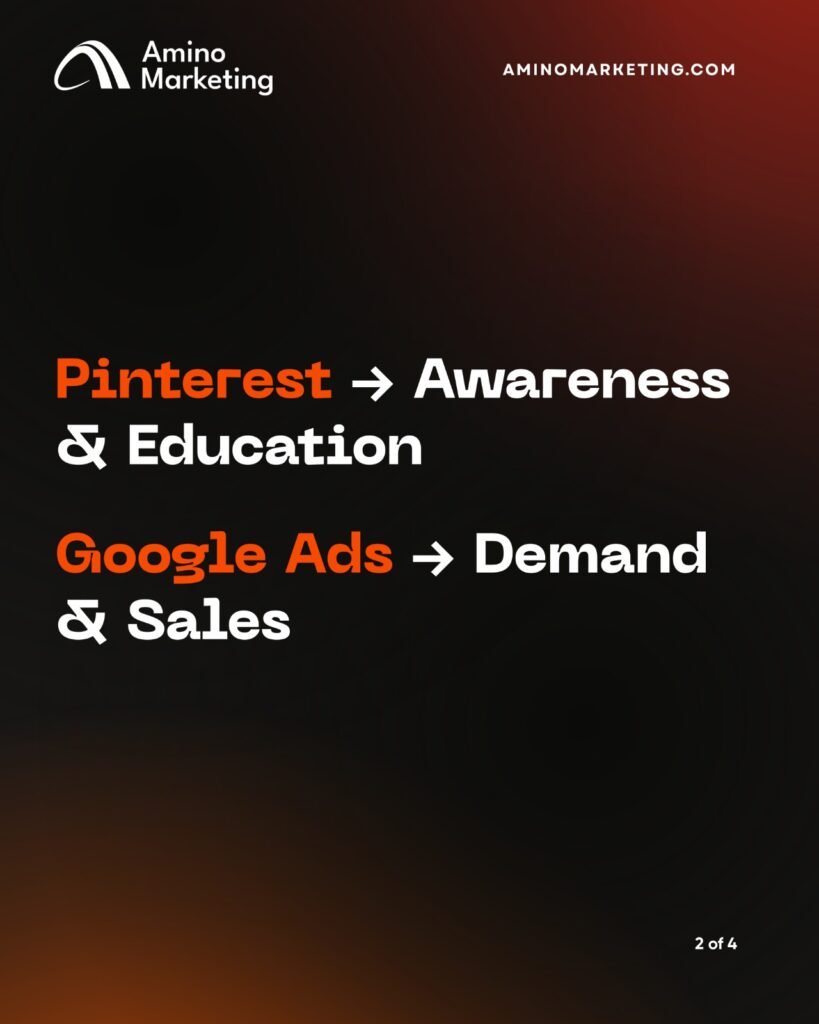
- Capturing Intent: When a user searches for a specific compound or a “research peptide,” your brand needs to be at the top.
- The Synergy: Because the user might have already seen your educational content on Pinterest, your Google Ad feels like a trusted recommendation rather than a cold pitch.
- Compliance-First Bidding: We structure Google campaigns to focus on “Search Intent” rather than “Medical Claims,” keeping your Merchant Center safe.
3. The Result: Scalable Growth and Lower Costs
When you stop running random ads and start using a system, the data shifts in your favor.

By implementing this dual-platform approach, our partners see three major shifts:
- Lower CPA (Cost Per Acquisition): Warm traffic from Pinterest converts at a much higher rate on Google, dropping your overall cost to get a customer.
- Better Approval Rates: Educational content is rarely flagged. By building a funnel based on “Information First,” your ad accounts stay healthy and active.
- Scalable Growth: Unlike “hacks,” this system is repeatable. As you add more educational pins, your Google Ads sales naturally grow.
Conclusion: Let Us Build Your System
Peptide marketing is a game of strategy, not just spend. If you are tired of inconsistent results and “random” marketing, it’s time to install a system that actually converts.

Let our team handle the complexity of Pinterest and Google Ads for you.
Comment “AMINO” or DM us to get started. @aminomarketing
Frequently Asked Questions (FAQs)
Q1: Is Pinterest really effective for health-tech and peptides? A: Yes. Pinterest users are actively looking for “how-to” and “lifestyle optimization” content. It is the perfect place to host the educational top-of-funnel content that peptides require.
Q2: How does this system lower my CPA? A: Traditional ads are expensive because you are paying to “cold call” people. Our system uses Pinterest (lower cost) to educate the user, so by the time they hit Google, they are ready to buy, making the final click much cheaper.
Q3: Will my Google Ads account be safe? A: We focus on high-intent search terms and “Bridge Pages” that comply with Google’s advertising policies, significantly reducing the risk of suspension compared to direct-to-product ads.
Q4: How long does it take to see results from the system? A: While Google Ads can provide immediate traffic, the synergy between Pinterest and Google usually hits its peak efficiency within 30 to 60 days as the “Awareness” data builds up.