
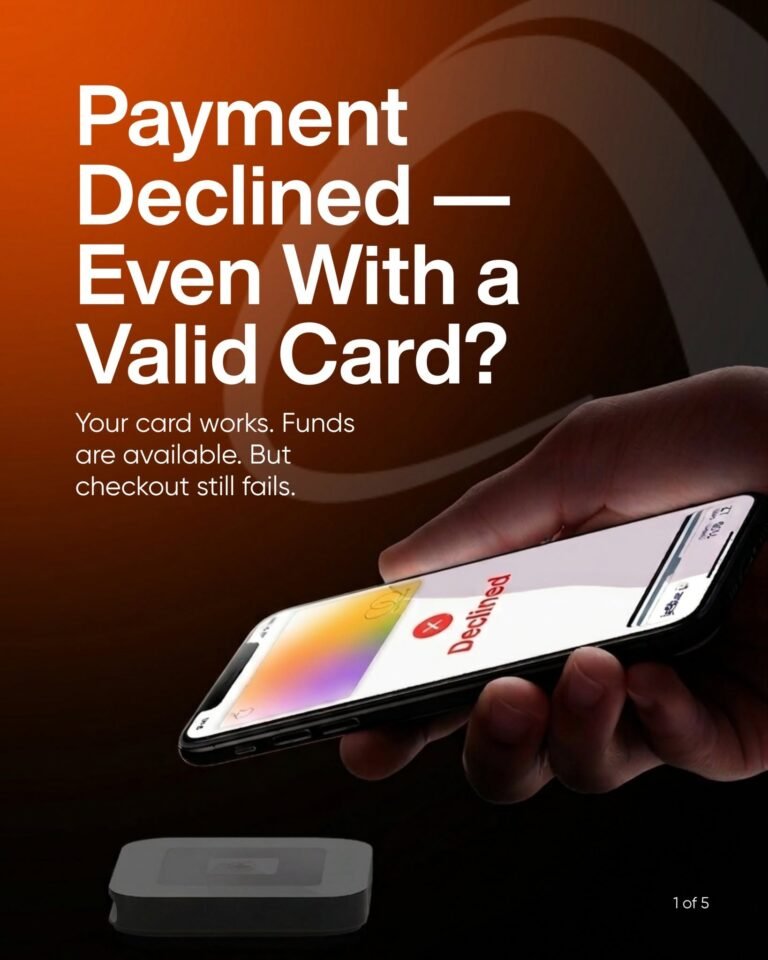
There is nothing more frustrating in ecommerce than bringing a ready-to-buy customer to checkout, only to have their payment declined. The customer’s card works, funds are available, and the billing address is accurate—yet the transaction fails.
For research chemical and peptide ecommerce brands, false declines are an ongoing challenge. Standard payment processors often flag, block, or automatically decline legitimate orders, leaving buyers confused and store owners out of revenue.
Understanding why valid cards fail at checkout and setting up reliable high-risk alternatives is essential for protecting your conversion rate and keeping your store profitable.
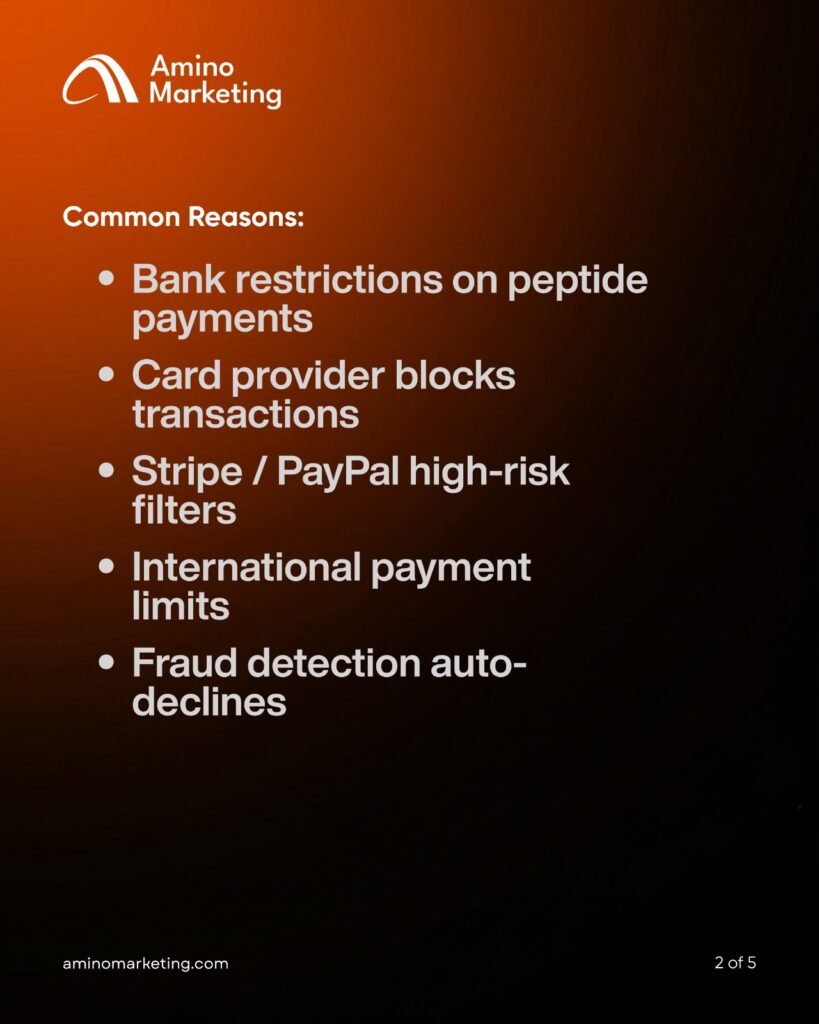
Common Reasons Valid Cards Get Declined
When a customer attempts to buy and receives a generic “Declined” error, the issue usually isn’t on the customer’s end. Instead, automated filters across banks and payment networks silently block the transaction.
Here are the primary drivers behind unexpected checkout failures:
- Bank Restrictions on Peptide Payments: Many traditional issuing banks automatically block transactions tied to merchant category codes related to peptides and research chemicals.
- Card Provider Blocks: Credit card networks enforce strict risk controls that automatically flag high-ticket or specialty health orders as unauthorized transactions.
- Stripe / PayPal High-Risk Filters: Standard aggregators like Stripe, PayPal, or Square utilize aggressive automated risk models that hold or reject payments from high-risk verticals.
- International Payment Limits: If your customer is buying from abroad, cross-border banking security algorithms frequently drop transactions without warning.
- Fraud Detection Auto-Declines: Overly sensitive anti-fraud algorithms often mistake genuine buyers for fraudulent activity, instantly declining legitimate payments.
What False Declines Are Costing Your Brand
Every time a valid card is rejected at checkout, your business suffers far more than just a single missed transaction. The ripple effects damage customer trust and erode your overall ROI:
- ❌ Lost Sales at Checkout: High-intent customers who are ready to purchase give up after 1–2 failed attempts.
- ❌ Spiking Abandoned Carts: Your cart abandonment metric swells as buyers walk away without completing their order.
- ❌ Frustrated Customers: Poor checkout experiences alienate repeat customers, driving them directly toward competitors with functional payment options.
- ❌ Lower Store Conversion Rates: Wasted ad traffic and failed orders drive down your site’s macro conversion rate, directly driving up your overall customer acquisition costs (CAC).
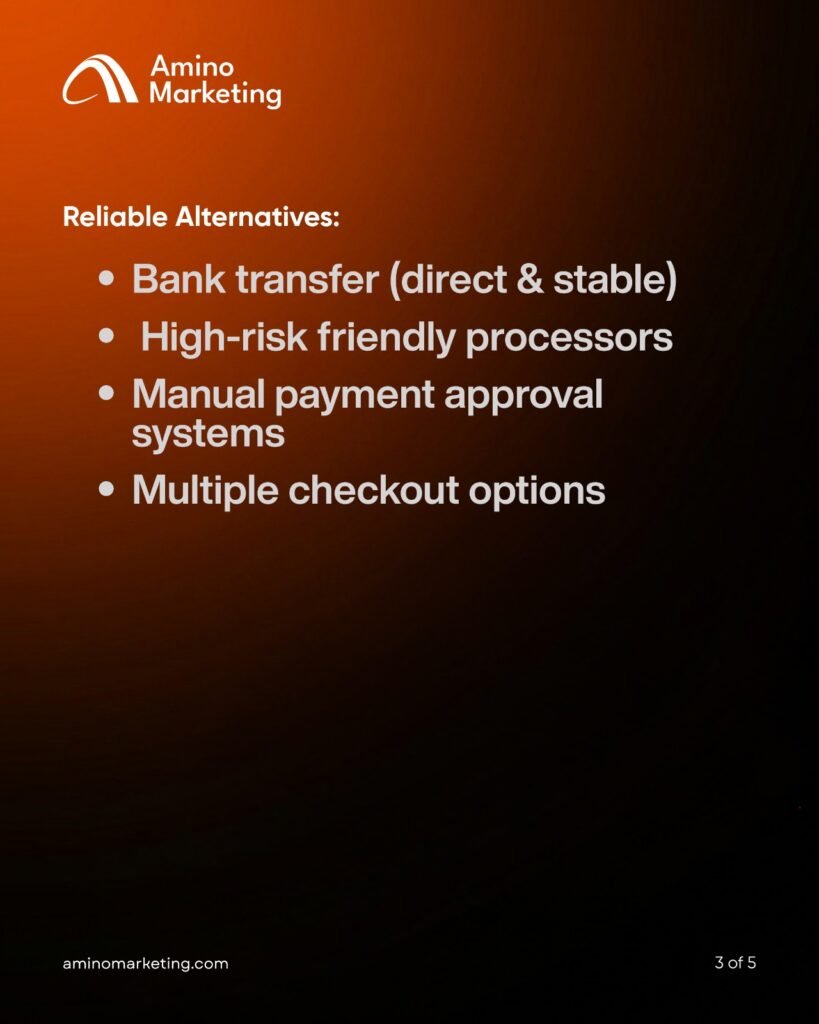
Reliable Payment Alternatives for High-Risk Brands
To stop burning ad dollars and losing ready-to-buy customers, your checkout infrastructure needs redundancy. Implementing high-risk friendly payment rails ensures every customer has a path to complete their order.
Here are four reliable alternatives winning peptide brands use to guarantee payment processing stability:
1. Direct Bank Transfers (ACH / Wire)
Direct bank transfers are stable, low-cost, and bypass card network restrictions completely. Offering direct bank transfer options at checkout provides a direct, reliable fallback for domestic and international buyers alike.
2. High-Risk Friendly Merchant Processors
Partnering with dedicated high-risk merchant account providers ensures your business operates with processing contracts specifically underwriting research chemical transactions—eliminating sudden account freezes.
3. Manual & Offline Payment Approvals
Providing flexible manual payment approval workflows allows your sales or support team to review flagged orders, send custom pay links, and capture high-value orders safely.
4. Multiple Checkout Options
Never rely on a single payment gateway. Offering a multi-tier checkout infrastructure—combining credit card processing, bank transfer, crypto, and invoice payments—guarantees that if one processor filters a card, the customer can complete their purchase via another route.
Frequently Asked Questions (FAQ)
Why do standard processors like Stripe or PayPal decline valid cards for peptide stores?
Standard payment processors operate on low-risk transaction models. They use automated risk filters that flag specialty industries like research chemicals or peptides, resulting in automatic declines even when the cardholder has sufficient funds.
How can a merchant reduce checkout payment declines?
Merchants can reduce payment declines by integrating high-risk merchant accounts, setting up fallback payment options like direct bank transfers or crypto, and utilizing multi-gateway checkout routing.
What is the safest payment method for high-risk ecommerce platforms?
Direct bank transfers (ACH/SEPA/Wire) and underwritten high-risk merchant accounts are the most stable payment methods, as they carry minimal risk of sudden account suspension or arbitrary card blocks.
Build a Resilient Checkout Infrastructure
Losing customers at the final second because of payment processing errors is entirely preventable. By diversifying your checkout rails, integrating dedicated high-risk processors, and offering direct bank alternatives, you can protect your sales funnel and maximize store revenue.
At Amino Marketing, we help peptide and high-risk ecommerce brands engineer reliable technical infrastructure, optimized checkout funnels, and compliant growth strategies designed to scale.
Ready to Fix Your Checkout and Recover Lost Sales?
If payment declines and abandoned carts are eating into your revenue, it is time to build a resilient payment system.
DM “Amino Marketing” today or visit aminomarketing.com to audit your store’s checkout stack.